

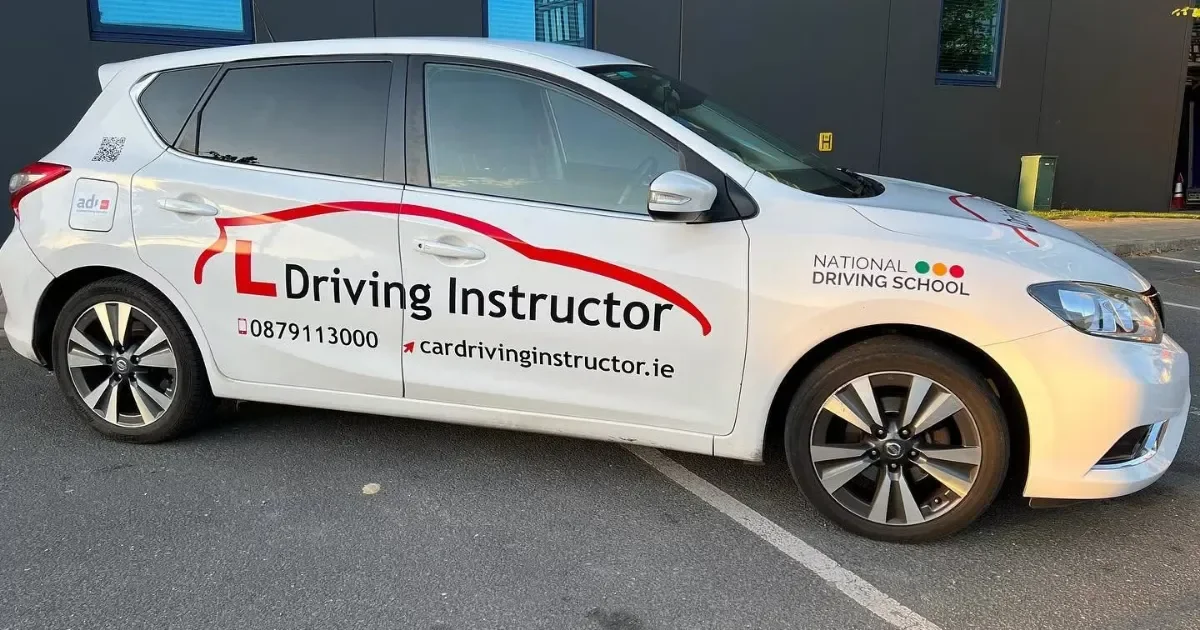
If you've booked your driving test at the Dún Laoghaire Test Centre, you're probably wondering what roads you might be asked to drive on, what manoeuvres you'll need to complete and how best to prepare.
It's a common question, particularly for learners who haven't spent much time driving around the area.
While you can't know the exact route your examiner will take, becoming familiar with local roads, junctions and different driving conditions can make a real difference to your confidence on test day.
In this guide, we'll look at what to expect during your driving test, the skills you'll be assessed on and how you can prepare for your test in Dún Laoghaire.
What Happens at the Start of Your Driving Test?
Before you head out on the road, your examiner will begin by checking your documentation (insurance certificate is required here alongside a valid learner permit) and assessing your knowledge of basic road safety.
This includes a short oral assessment covering the Rules of the Road and road signs, followed by vehicle safety and technical checks.
Rules of the Road and Theory Questions
You'll be asked questions about general driving knowledge and road safety.
These may cover topics such as:
Speed limits on different types of roads.
Right-of-way rules at junctions.
Safe following distances.
Road markings and traffic signs.
How to respond to different road conditions.
Pedestrian and cyclist safety.
You may also be asked to identify road signs and demonstrate the appropriate hand signals.
This isn't another full Driver Theory Test, but you should have a good understanding of the Rules of the Road before attending.
Vehicle Safety and Technical Checks
The examiner will also assess your knowledge of basic vehicle safety checks.
These can include checking tyres, engine oil, coolant, lights and other important components.
You may also be asked to demonstrate how to operate controls such as windscreen wipers, washers, indicators and lights.
It's worth spending some time revising these questions before your test, particularly if you're unfamiliar with the vehicle you'll be using.
You can prepare using our Driving Test Questions, Under the Bonnet Guide and Irish Road Signs resources.
What Are the Dún Laoghaire Driving Test Routes Like?
The Dún Laoghaire driving test area includes a mixture of residential roads, busier junctions and roads with different speed limits and traffic conditions.
Depending on the route selected, you may encounter situations that require careful observation, good road positioning and the ability to make safe decisions without assistance.
Some of the skills worth practising include:
Roundabouts: Correct approach speed, lane positioning, observation and signalling.
Junctions: Knowing when it's safe to proceed, particularly when turning right across oncoming traffic.
Residential roads: Dealing with parked vehicles, pedestrians and restricted space.
Road positioning: Maintaining a safe position when turning, changing lanes or navigating bends.
Speed management: Making appropriate progress while adjusting your speed to road and traffic conditions.
Observation: Checking mirrors and blind spots at the appropriate times.
These are important driving skills regardless of which test route you're given.
Can You Practise the Exact Driving Test Route?
You can practise driving around the Dún Laoghaire and Deansgrange areas, but there's no guarantee you'll encounter a particular road or junction during your test.
The examiner selects the route, and routes can vary.
Rather than memorising a sequence of turns, it's much better to become comfortable handling different situations independently.
For example, knowing how to approach an unfamiliar roundabout safely is far more valuable than remembering which exit you took during a previous lesson.
The aim is to become a confident, competent driver who can respond appropriately wherever the examiner directs you.
What Manoeuvres Will You Be Asked to Complete?
Alongside your normal driving, the practical test assesses your ability to complete several important manoeuvres safely.
These include the turnabout, reversing around a corner and a hill start.
1. Turnabout (Three-Point Turn)
During your driving test, the examiner will ask you to turn the car around on the road so that you're facing the opposite direction.
Although it's commonly called a three-point turn, you don't necessarily have to complete it in exactly three movements. You can move backwards and forwards more than once if necessary.
The important things are:
Checking for approaching traffic, pedestrians and other hazards.
Maintaining good observations throughout.
Controlling the vehicle at a slow, steady speed.
Using the available space safely.
Avoiding unnecessary risks to other road users.
Your examiner is looking for safe vehicle control and observation rather than how quickly you complete the manoeuvre.
2. Reversing Around a Corner
Reversing around a corner is another manoeuvre you'll need to prepare for.
The examiner will direct you to a suitable junction and ask you to reverse into a side road.
You'll need to maintain control of the vehicle while keeping reasonably close to the kerb and checking your surroundings throughout.
Some of the key things to remember include:
Carrying out appropriate observations before reversing.
Checking for approaching vehicles, cyclists and pedestrians.
Maintaining a slow, controlled speed.
Keeping a reasonable distance from the kerb.
Stopping if another road user approaches and it becomes unsafe to continue.
This manoeuvre is particularly useful to practise on residential roads, where parked cars and other road users can make observations more challenging.
3. Hill Starts
You'll also need to demonstrate that you can move away safely when stopped on an incline.
For manual drivers, this means coordinating the clutch, accelerator and brakes to move off smoothly without excessive rollback or stalling.
For automatic drivers, the process is different, but maintaining control and carrying out the appropriate observations remain essential.
When practising hill starts, focus on:
Securing the vehicle when stopped.
Checking mirrors and blind spots before moving off.
Moving away smoothly and safely.
Avoiding uncontrolled rollback.
Responding appropriately to surrounding traffic.
Practising these manoeuvres in advance can help you feel more comfortable if you're asked to complete them during your Dún Laoghaire driving test.
Common Areas Learners Should Focus On
There are several other aspects of driving that learners can benefit from revisiting before their test.
1. Observation at Junctions
Good observation isn't just about looking left and right. It's about understanding what's happening around you and making decisions at the appropriate time.
Practise approaching junctions, judging safe gaps and checking for pedestrians and cyclists.
2. Roundabouts and Lane Positioning
Roundabouts can be challenging, particularly when you're unfamiliar with the road layout.
Focus on reading the signs and markings, choosing the correct lane and maintaining good observations throughout.
3. Making Appropriate Progress
Some learners become overly cautious during their test.
While safety should always come first, it's equally important to make appropriate progress when road and traffic conditions allow.
4. Driving Independently
During your driving test, the examiner will give you directions, but they won't coach you through each decision.
Getting comfortable making your own observations and decisions is an important part of your preparation.
How Can a Pre-Test Lesson Help?
A pre-test driving lesson allows you to assess your driving in conditions similar to those you'll experience during the actual test.
Andrew Jenkins is an RSA-approved driving instructor with extensive knowledge of the Dún Laoghaire driving test area.
During a pre-test lesson, you can focus on:
Practising local roads, junctions and roundabouts.
Reviewing turnabouts, reversing around corners and hill starts.
Improving observation, positioning and speed management.
Identifying driving habits that may need attention.
Revising driving test questions and vehicle safety checks.
Receiving practical feedback on areas to improve before test day.
Whether you're taking your test in a manual or automatic car, the lesson can be tailored to your experience and the skills you want to focus on.
The goal isn't to memorise a test route. It's to improve your driving and help you feel more prepared for whatever comes your way.
Preparing for Your Dún Laoghaire Driving Test?
If your driving test is approaching, now is a good time to identify any areas that need a little extra attention.
Andrew offers manual and automatic pre-test lessons, including automatic pre-tests in your own car, with practical guidance and local test-area knowledge.
Whether you need to work on your manoeuvres, improve your confidence around junctions or simply want an assessment before the big day, a pre-test lesson can help you prepare.
Ready to prepare for your driving test?
Book Your Dún Laoghaire Pre-Test Lesson
Alternatively, WhatsApp Andrew on 087 911 3000 with your driving test date and time to enquire about availability.