

Irish road signs use a clear system of shapes, colors, and symbols to convey regulations, warnings, and information quickly and reliably. Regulatory signs are typically circular with red borders for prohibitions (like speed limits or no-entry) and blue circles for mandatory instructions (such as turn-left only). Warning signs are usually diamond-shaped with yellow backgrounds and black symbols to alert drivers to hazards like sharp bends, junctions, or pedestrian crossings. Directional and informational signs are rectangular and employ different color schemes—green for primary routes and motorways, blue for regional routes and motorways in some contexts, and white for local directions—while route numbers and place names are shown prominently. Temporary signs for roadworks are often orange to draw attention. Understanding these conventions, along with familiarizing yourself with common symbols (roundabouts, school zones, single-track roads, and priority road markings), is essential for safe driving in Ireland and for successfully navigating the driving test routes around Dun Laoghaire and surrounding areas.

Dane Tyghe explains the road signs: Road signs are visual instructions that tell drivers what to do, warn them of hazards, and guide them to destinations. Regulatory signs (like stop, yield, speed limit) must be obeyed; warning signs (often yellow or triangular) alert you to upcoming conditions such as curves, pedestrian crossings, or merging lanes; and informational or directional signs (green or blue) help with navigation and services. Signs use colors, shapes, and symbols so drivers can recognize their meaning quickly—triangles for warnings, circles for orders or prohibitions, rectangles for information—and consistent placement helps anticipate what’s ahead. Paying attention to and understanding these signs keeps traffic flowing safely and reduces the risk of collisions.
Road signs in Ireland: complete guide to prepare for your driving test
Overview
Ireland follows the Vienna Convention on Road Signs and Signals with some local variations.
Road signs are grouped by shape and colour to indicate their purpose: warning, regulatory (mandatory/prohibitory), information, direction, and temporary signs.
You must learn meanings, priorities, and how to act when you see them. Examiner will expect correct responses during the driving test and theory test knowledge is essential for hazard perception and decision-making.
Categories of signs
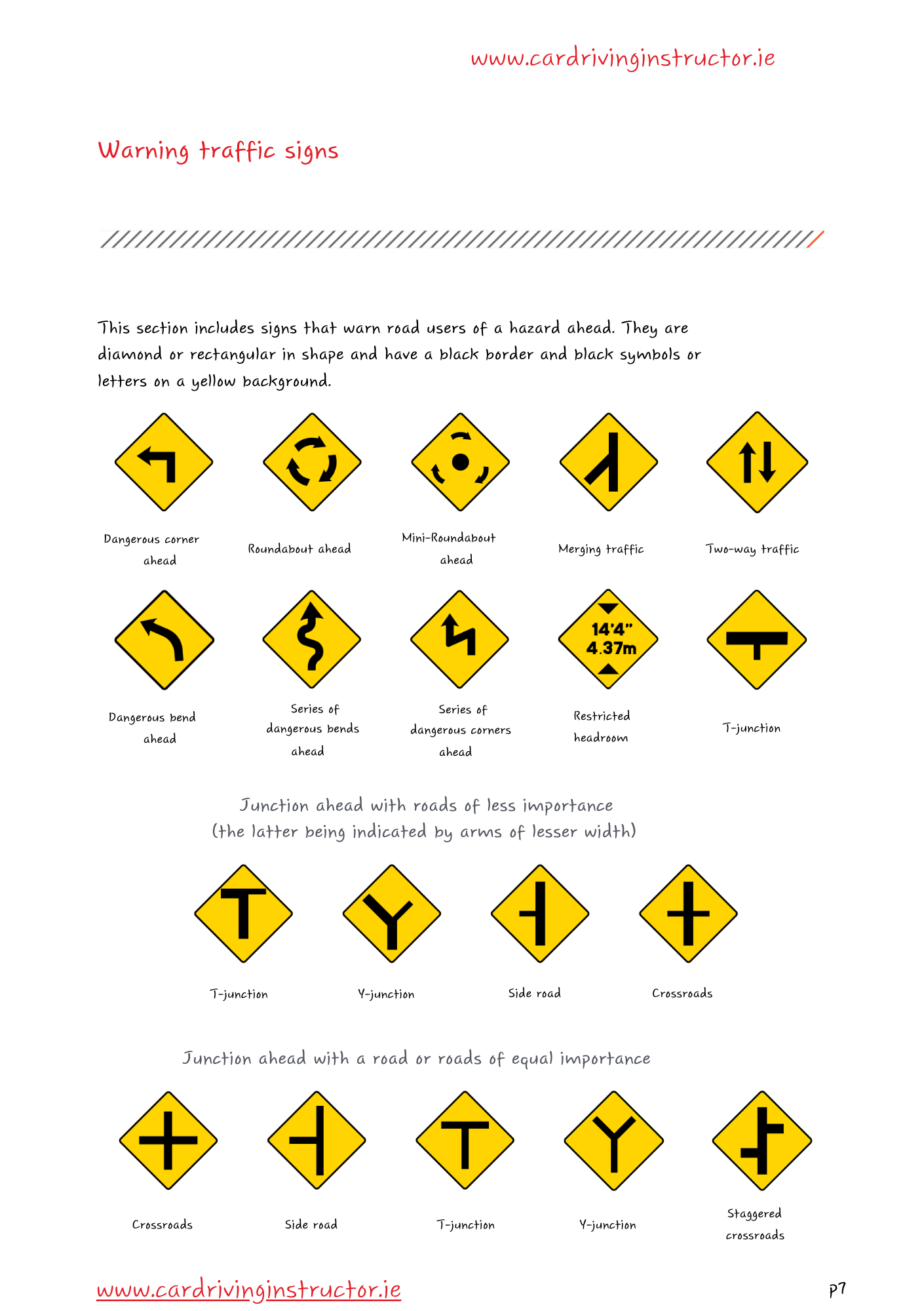
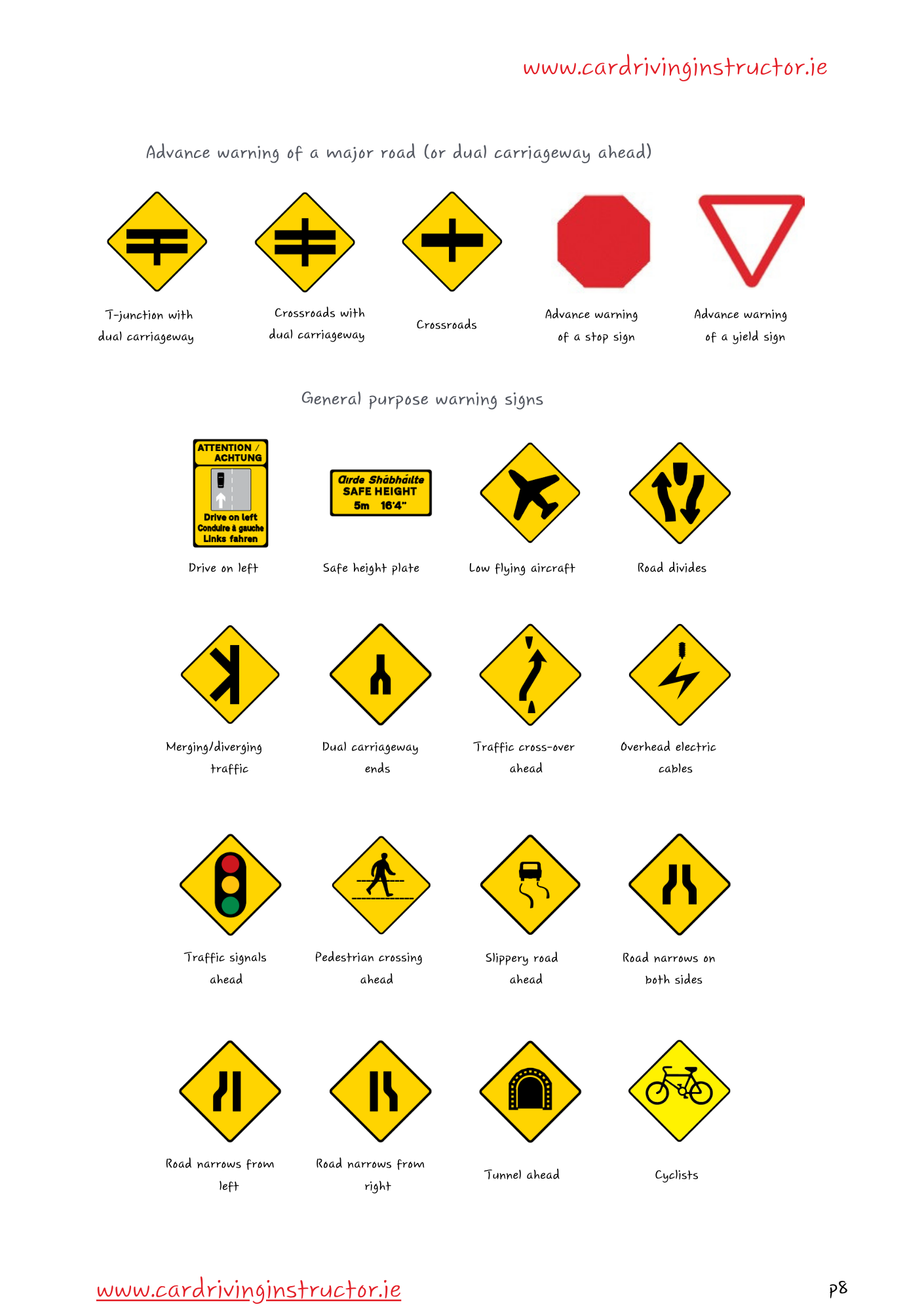
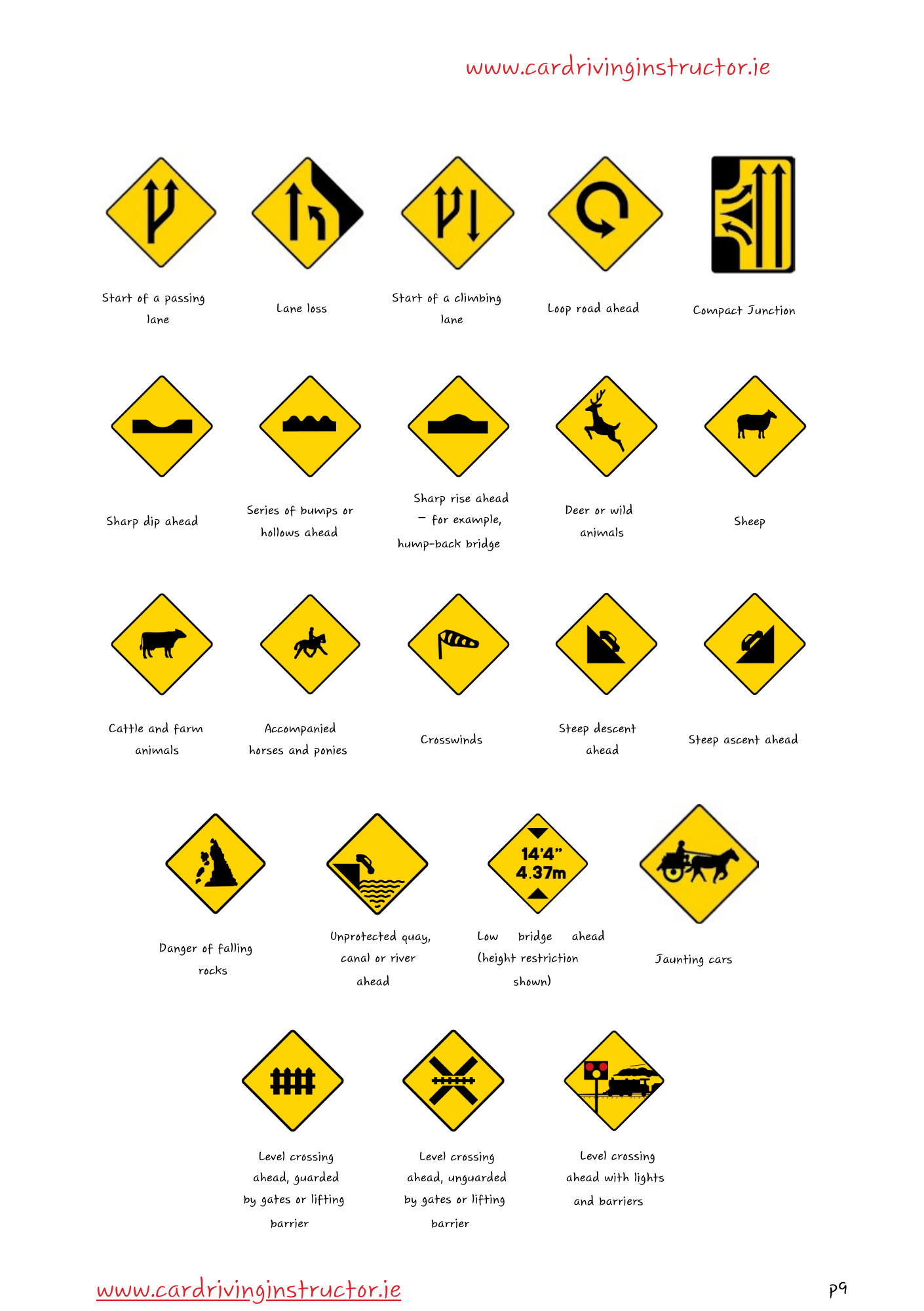
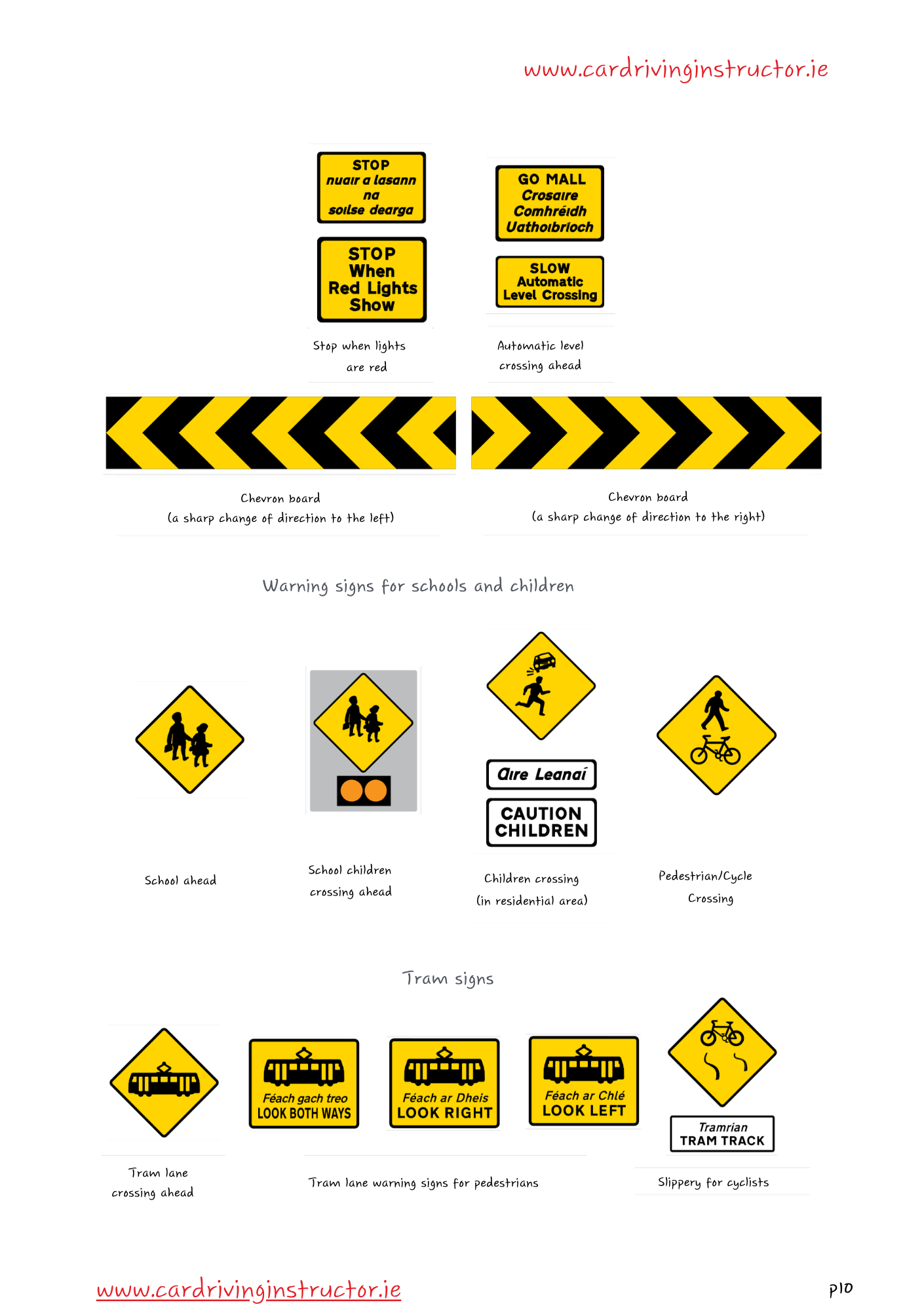
Warning signs (triangular, black symbol on white background with red border)
Purpose: warn about hazards or changes in road conditions ahead.
Common examples:
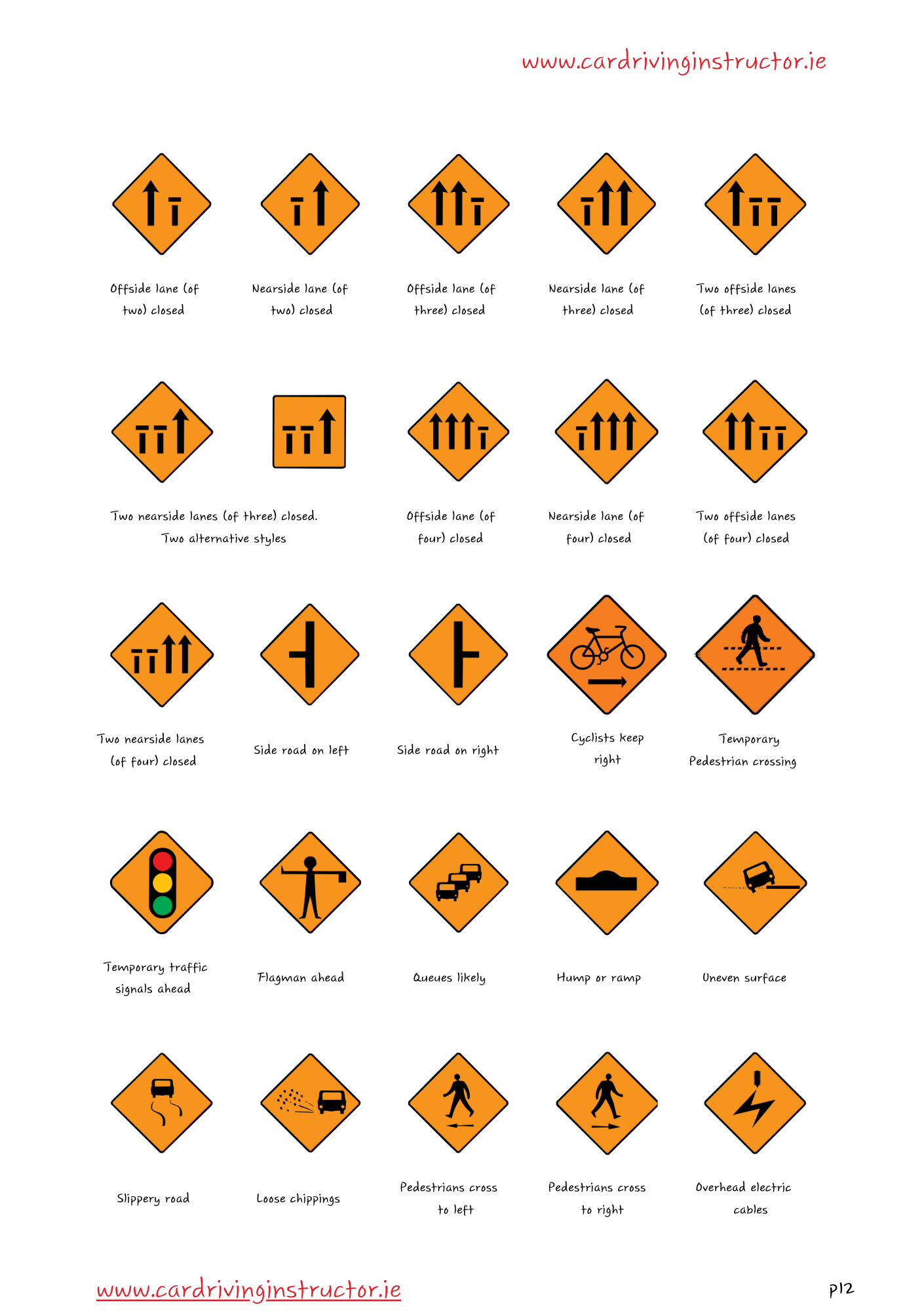
Junctions ahead (crossroads, side road left/right, T-junction): reduce speed and prepare to give way if required.
Sharp bend left/right, double bend: slow to a safe speed and position for visibility.
Narrow bridge or road narrows: check for oncoming traffic; give way if indicated.
Traffic signals ahead: be prepared to stop.
Pedestrian crossing, school ahead: watch for people crossing; reduce speed near schools at start/end times.
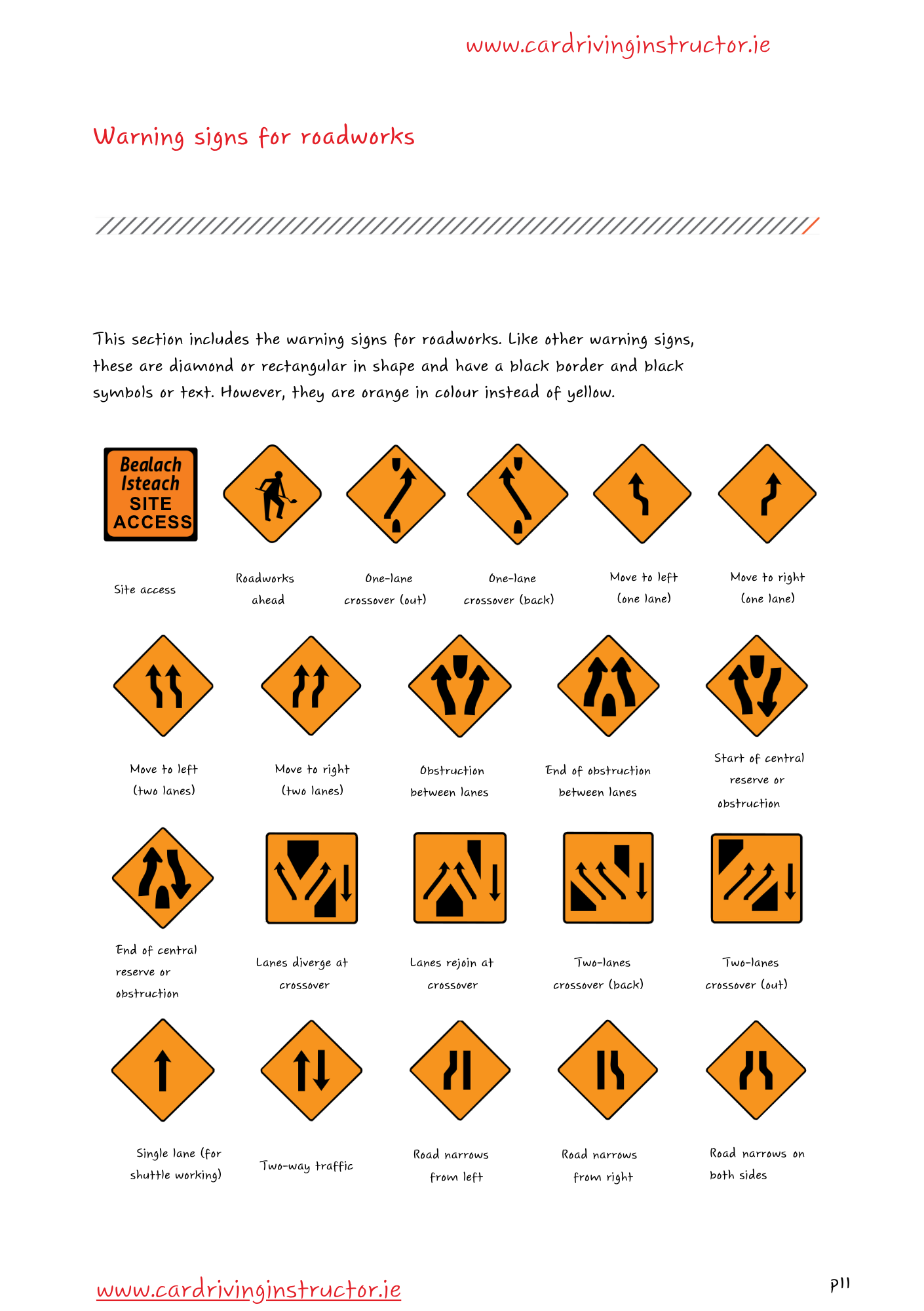
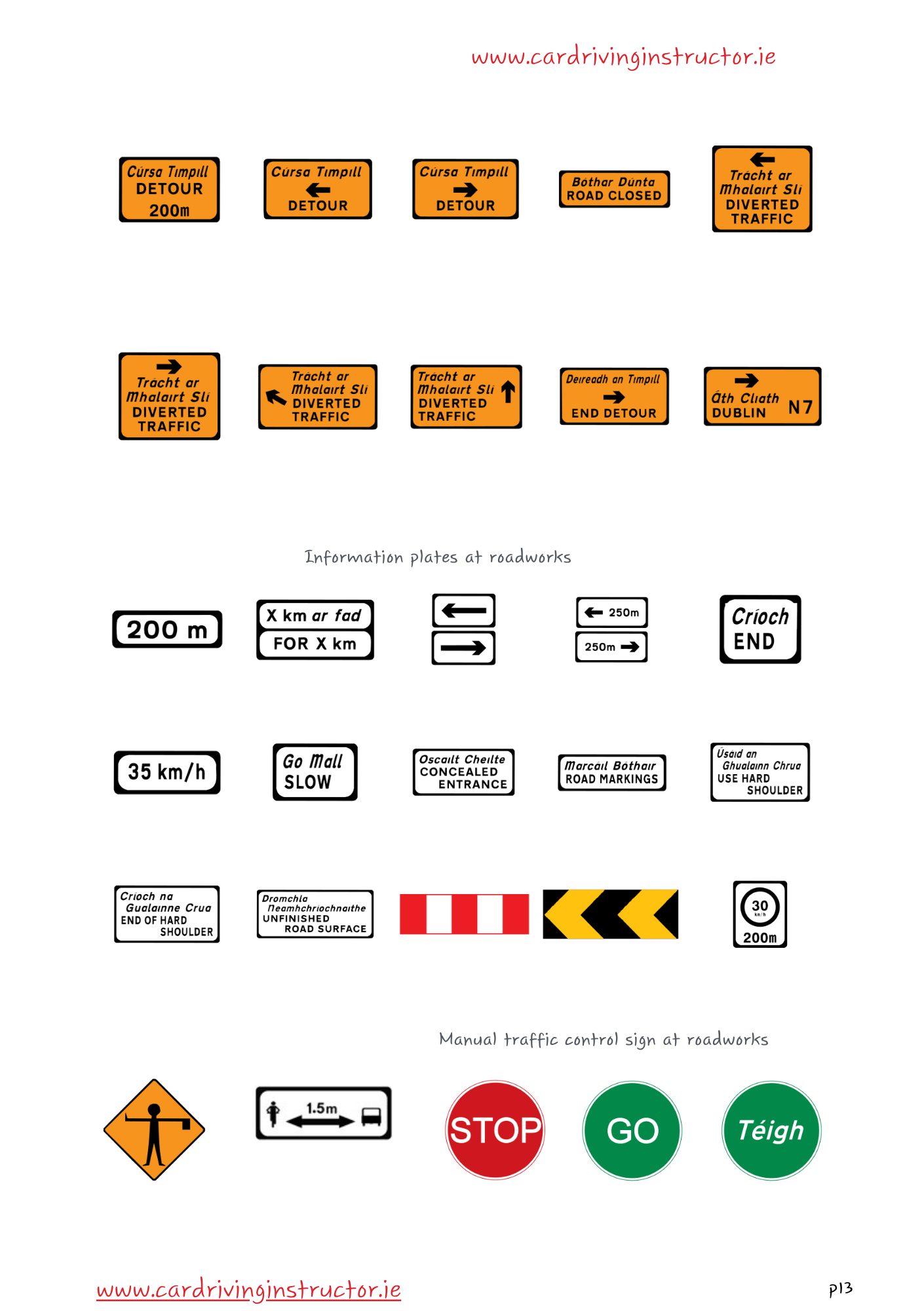
Roadworks, uneven road surface, loose chippings: reduce speed to avoid losing control or damaging the vehicle.
Roundabout ahead: be ready to give way to traffic on the roundabout (usually to the right in Ireland).
Slippery road: reduce speed and avoid sudden steering/braking.
Two-way traffic ahead: be aware you may meet oncoming vehicles.
Steep hill up or down: check gear selection and braking.
Prohibitory signs (circular, red border for restriction; blue circle for mandatory)
Red-circle prohibitory signs:
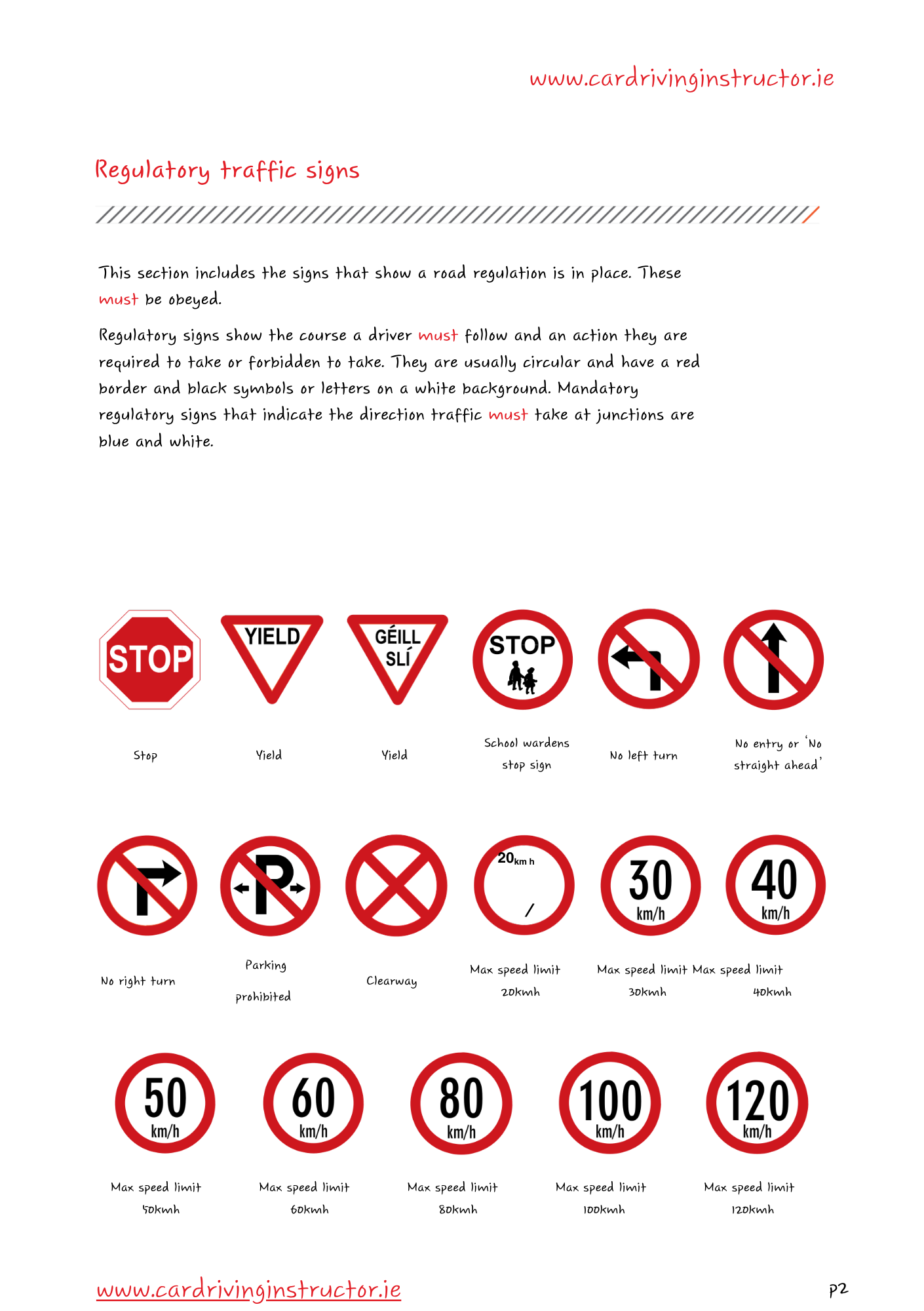
Speed limits: black number on white background with red circle (e.g., 50, 80, 100). Obey the posted limit; national speed limits apply where appropriate.
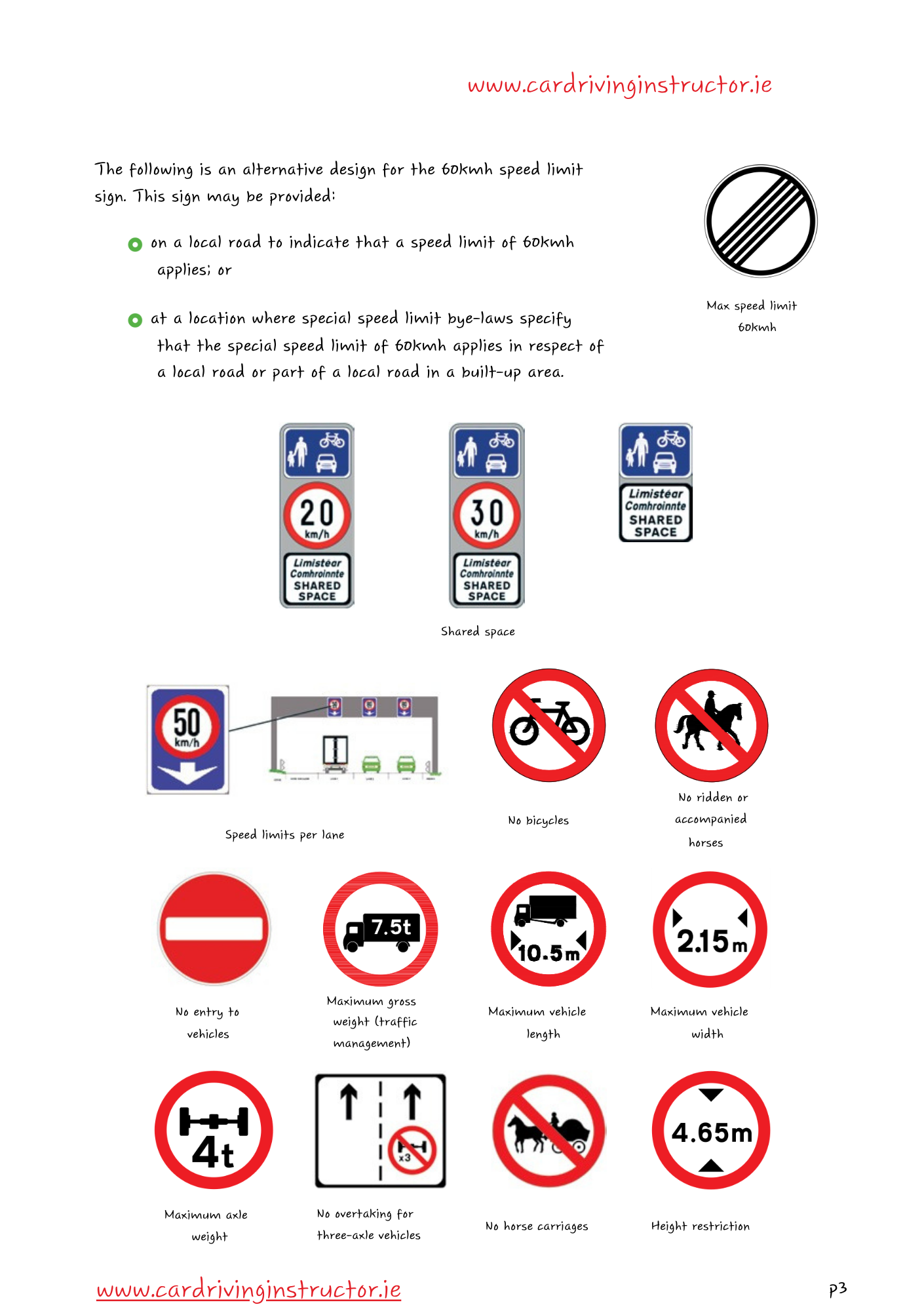
No entry: solid red circle with white horizontal bar — do not enter.
No left/right turn: prohibit turning; follow alternative route.
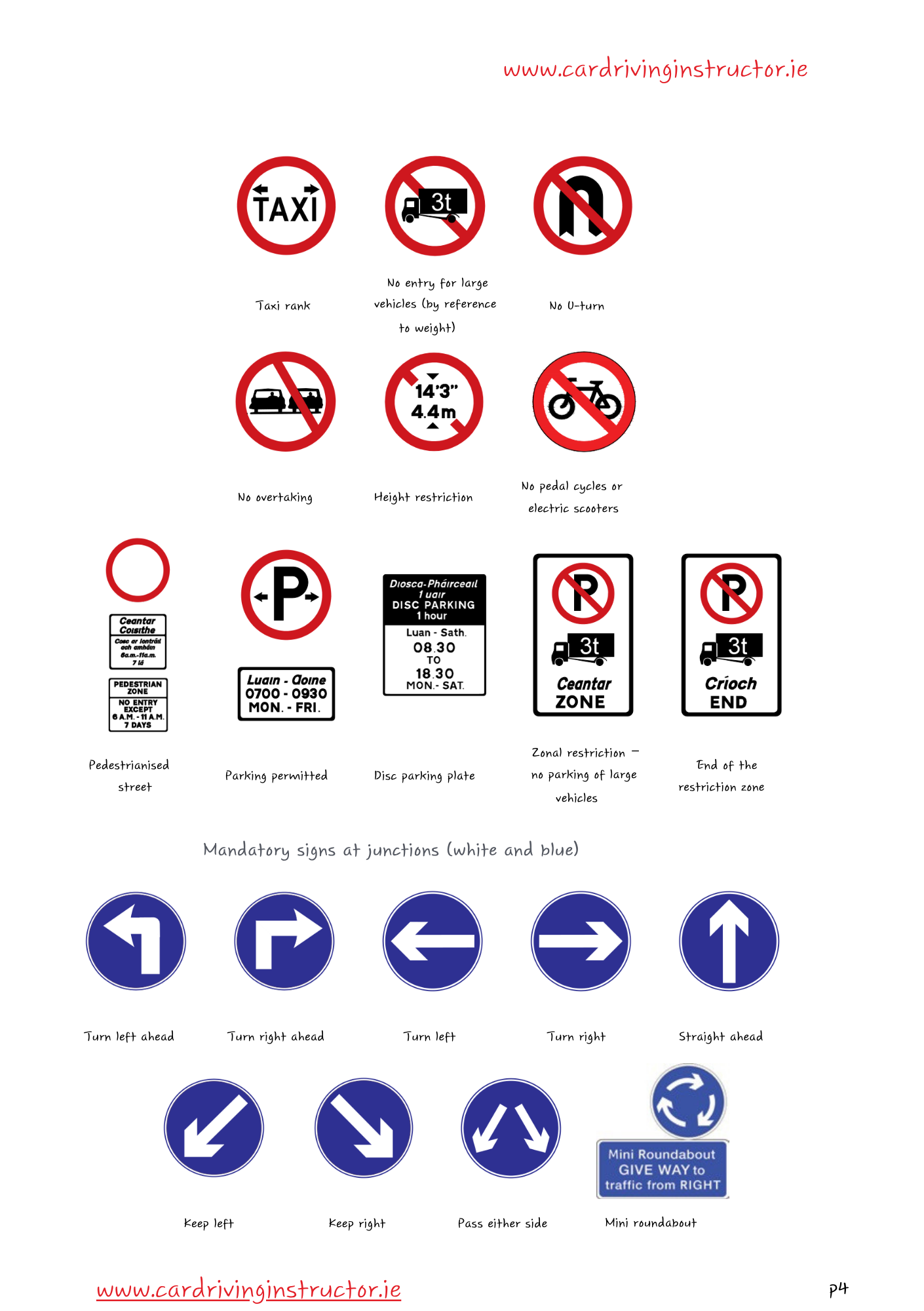
No U-turn: do not perform U-turns where shown.
No overtaking: usually car symbols, one black, one red — keep in lane.
No parking / no stopping: signs with P crossed out or red bars; know difference: no stopping is stricter (no waiting at all).
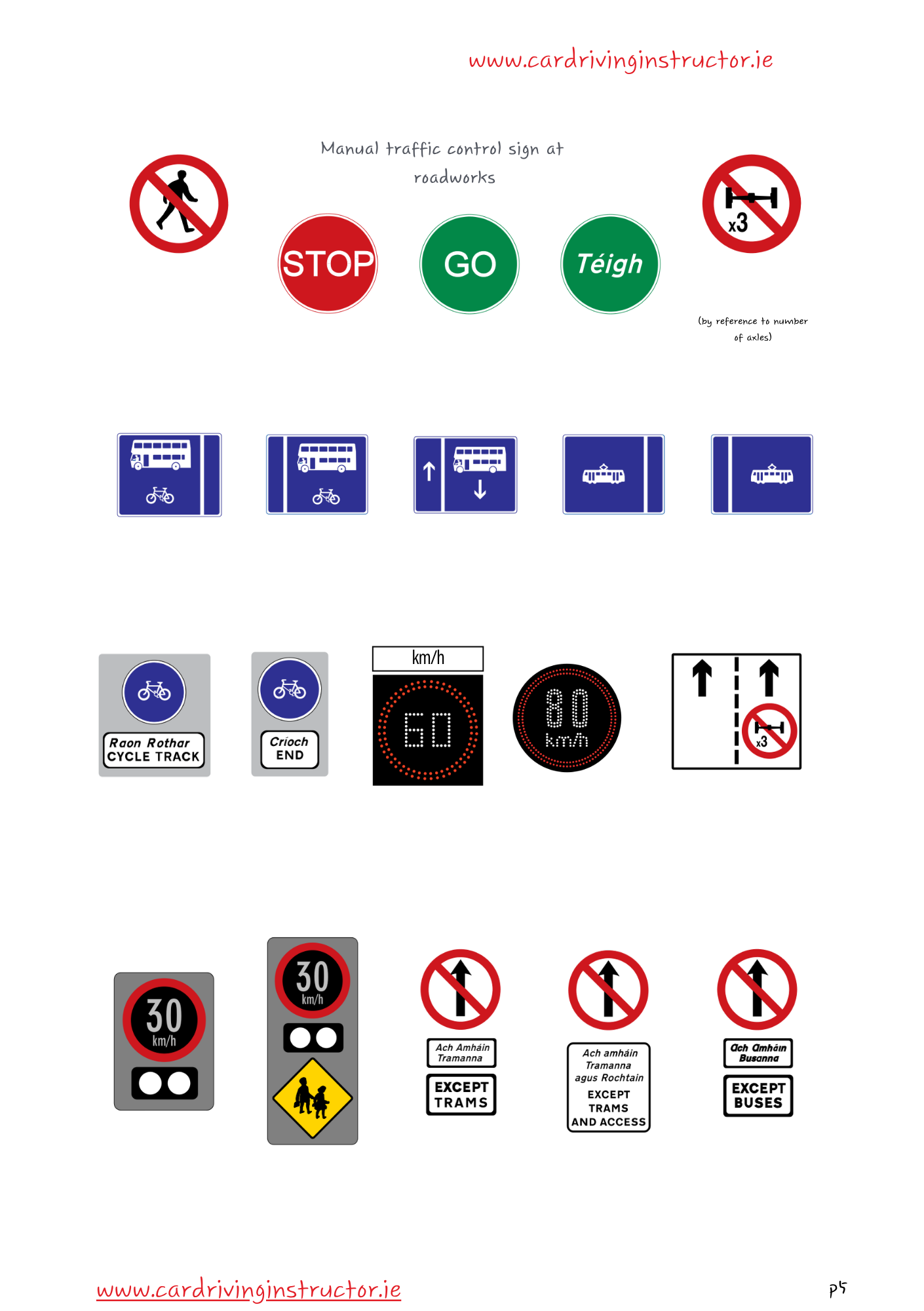
Weight restriction, width restriction, height restriction: ensure your vehicle complies.
Environmental restrictions (e.g., no heavy goods vehicles): follow if applicable.
Blue circular mandatory signs:
Directional mandatory arrows: must follow the indicated direction (left, right, keep left/right).
Minimum speed sign: white number on blue circle — maintain at least this speed except where unsafe.
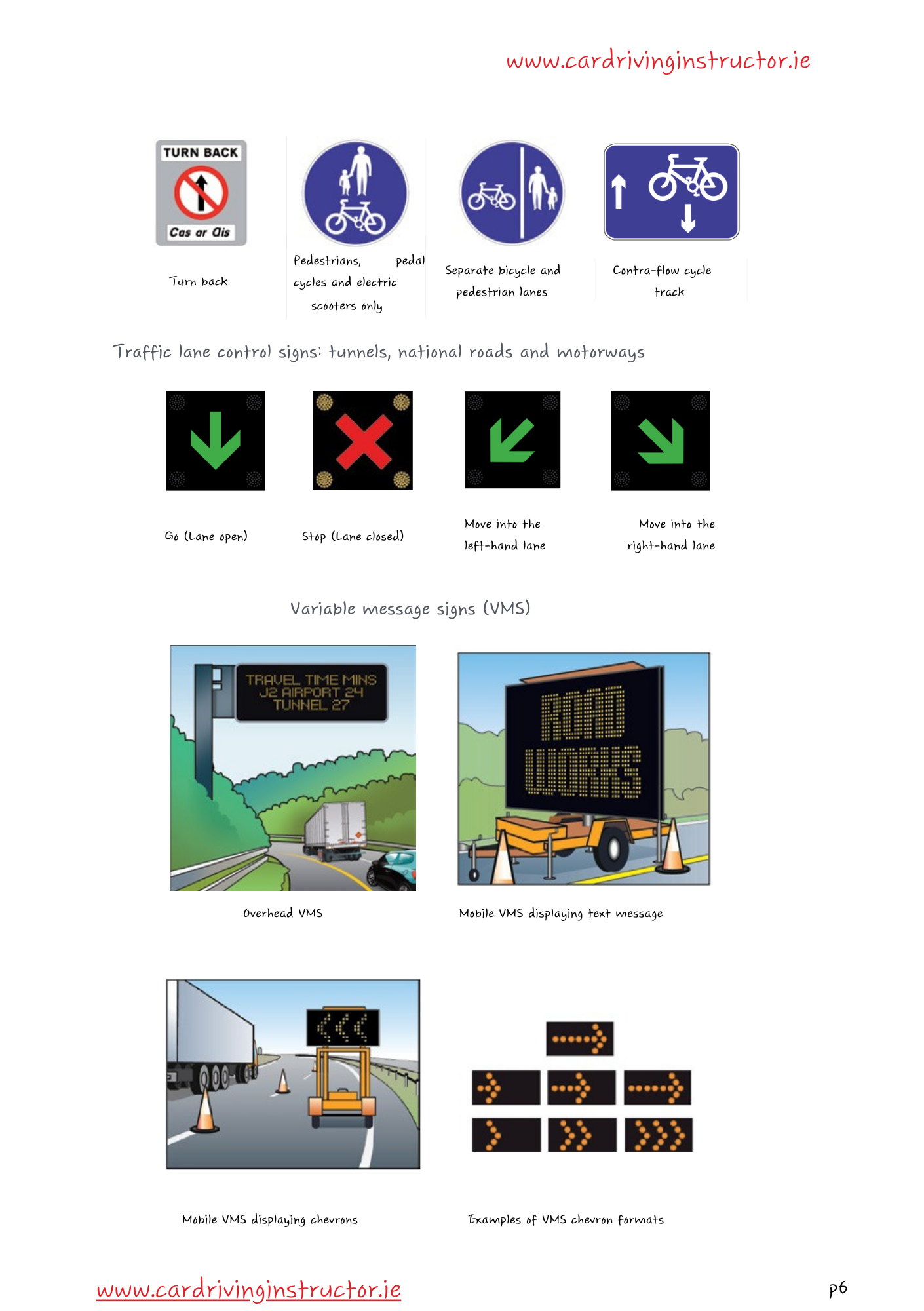
Cycle lane signs: indicate lanes reserved for cycles; motor vehicles must not use them while in operation.
Priority and regulatory signs
Stop sign (octagonal, red with STOP): Come to a complete stop at the stop line or before entering the intersection; give way to all other traffic/pedestrians.
Give Way (inverted triangle, red border): slow and be prepared to stop; give way to traffic on the major road.
Priority road and end of priority signs: white/yellow diamond indicates priority road; gray diamond with black diagonal indicates priority ends.
Give Way to oncoming vehicles / Give Way from the right/left in specific situations: follow the sign instructions at narrow passages or bridges.
Direction and information signs
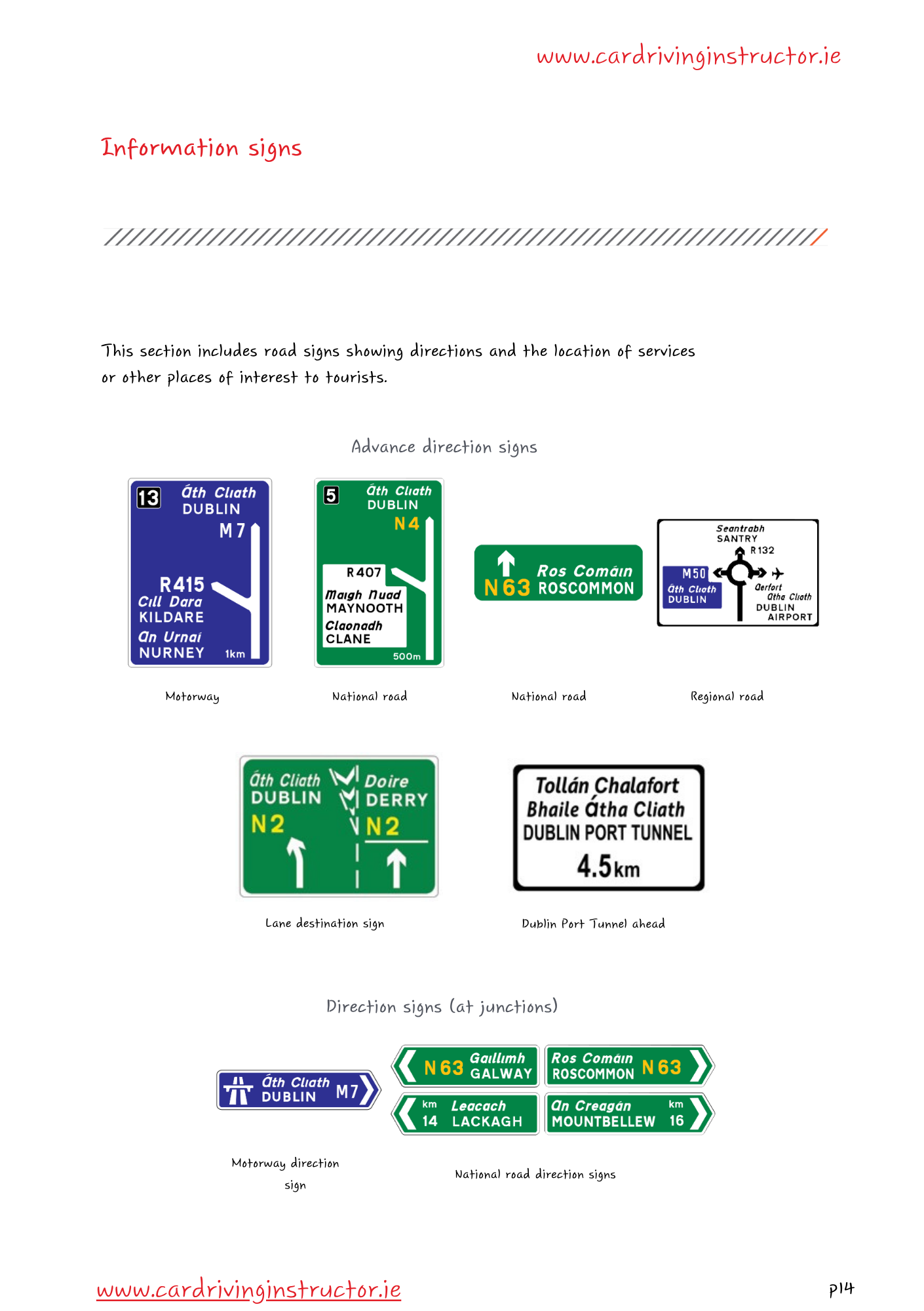
Blue rectangular signs: motorways and primary routes? In Ireland:
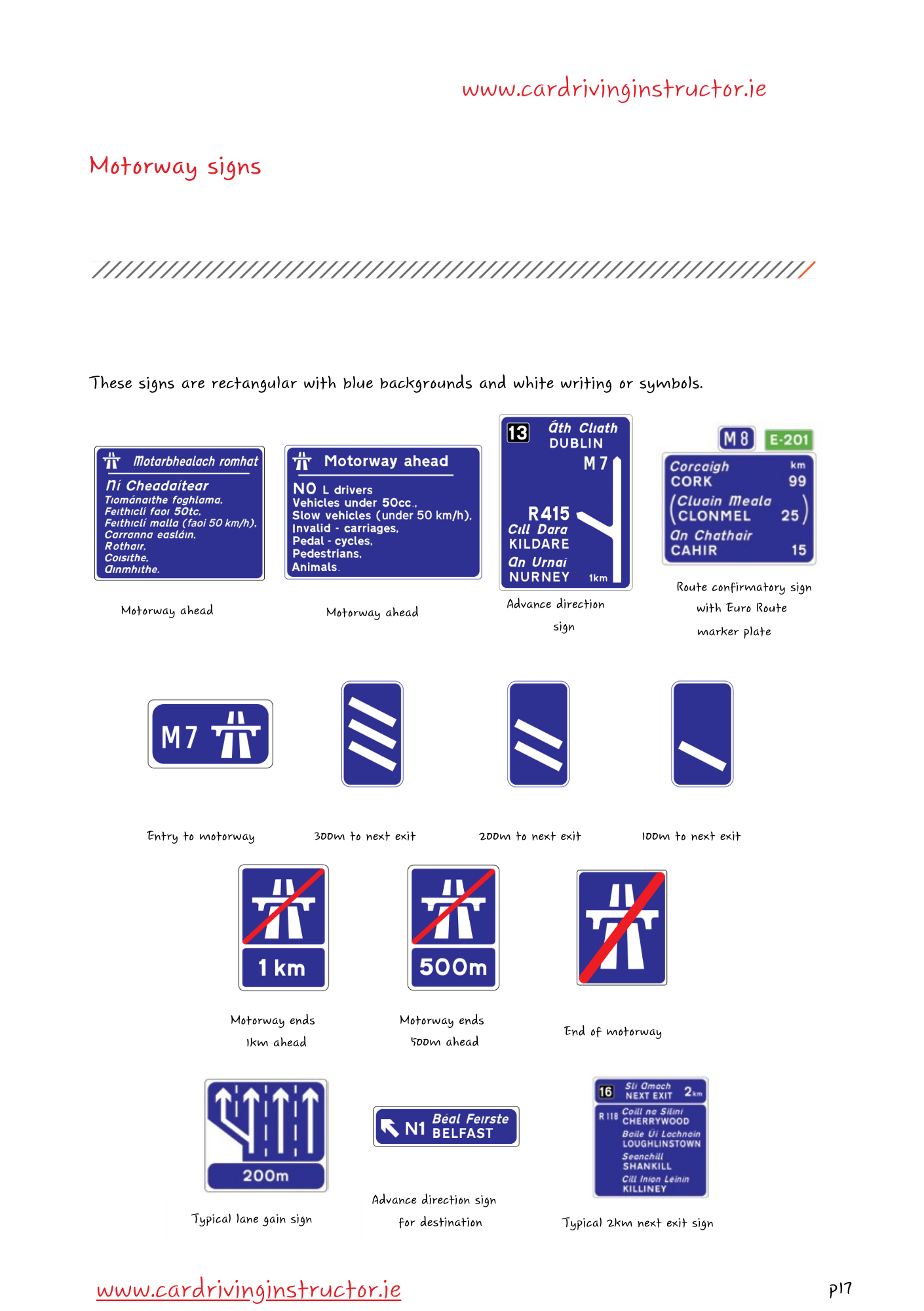
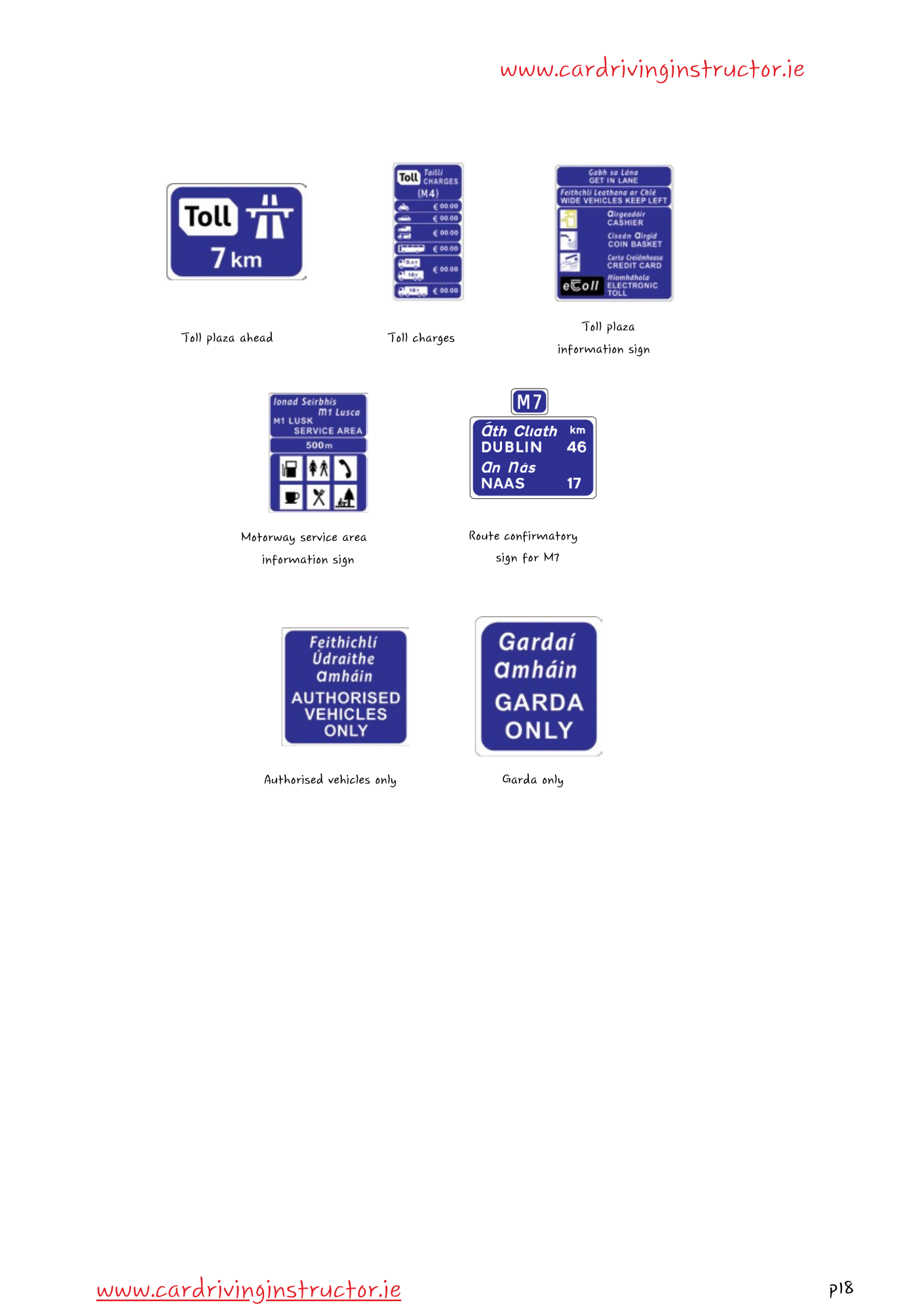
Motorway signs: large blue with white lettering; indicate motorway routes (M-number). On motorways, certain types of vehicles (pedestrians, learner drivers on motorways until rules changed) are restricted—check current rules. As of recent years, learner drivers are not permitted on motorways except in approved ADI training? (Confirm by checking up-to-date rules before test.)
Primary (national) routes often appear on green signs with yellow route numbers (N-roads). Local and minor roads are white signs.
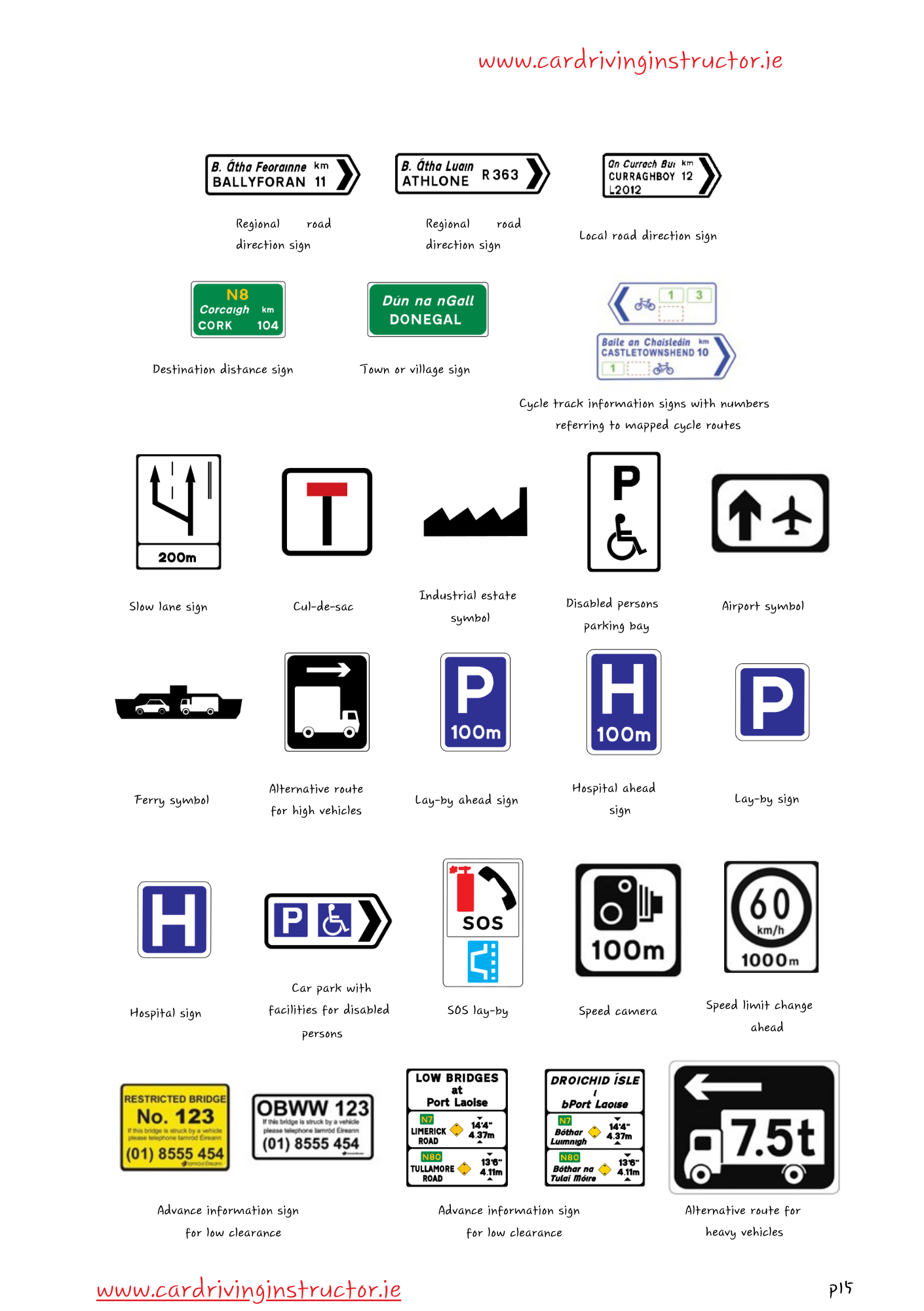
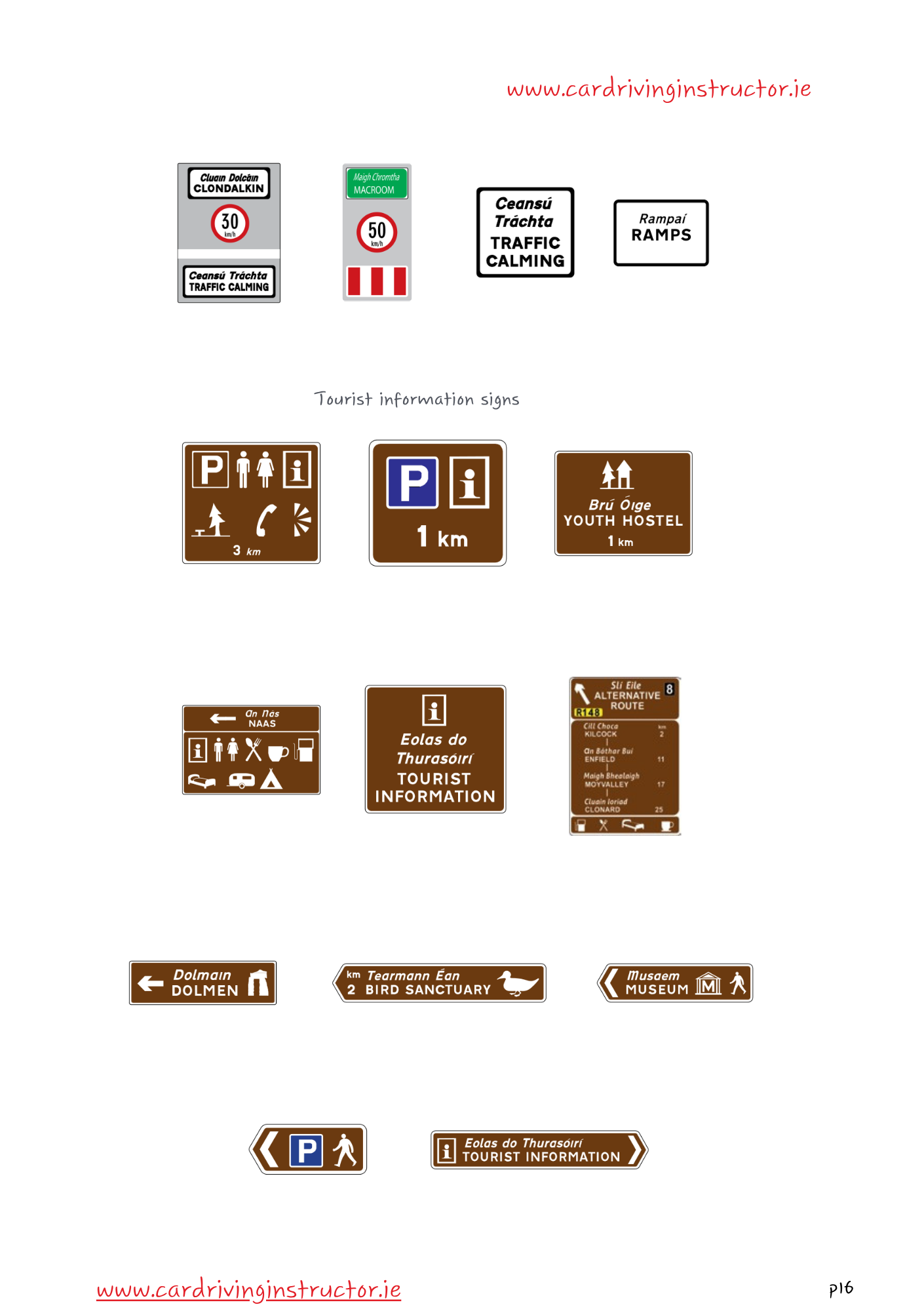
Brown tourist signs: attractions and tourist facilities.
White direction signs with black text: local destinations.
Route confirmation signs: show road number and distance to destinations—use for planning and navigation.
End of restrictions signs: white circle with diagonal black line (national speed limit applies) or signs that cancel previous prohibition.
Road markings and other traffic signs
Yellow box junction: do not enter unless your exit is clear; stay out if traffic blocking.
Solid white line down the middle:
Single solid white line: discourage overtaking; you should only overtake if safe and necessary and where permitted.